
Umgede Hide gets submerged during the worst floods in living memory

The start to 2026 has been eventful, to say the very least. Warnings of extreme weather began filtering through during the second week of January, and as we scrolled through the various weather apps it became obvious that the region was heading for some exceptional rainfall. What made it even more unsettling was how dramatically the forecasts changed from day to day, with predicted rainfall totals varying by as much as 100–300mm in a single day. How could we be expecting 300mm of rain in one day when our annual average is only around 450mm?
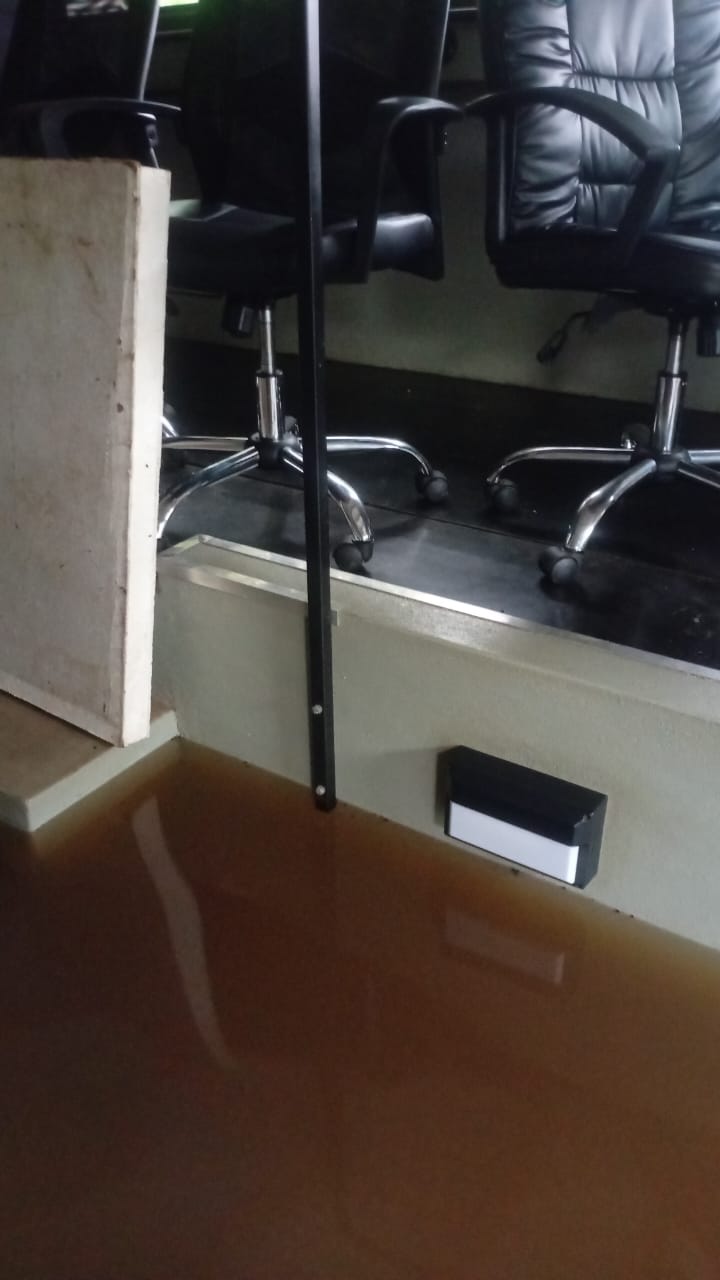
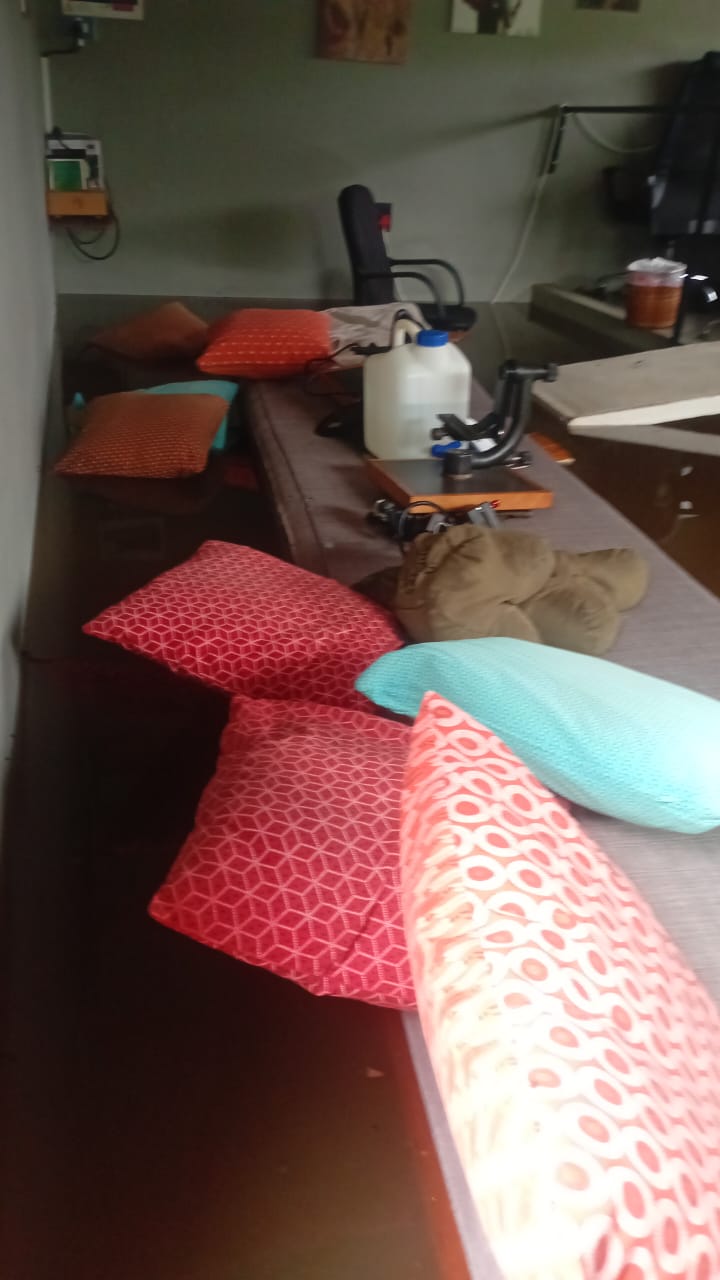
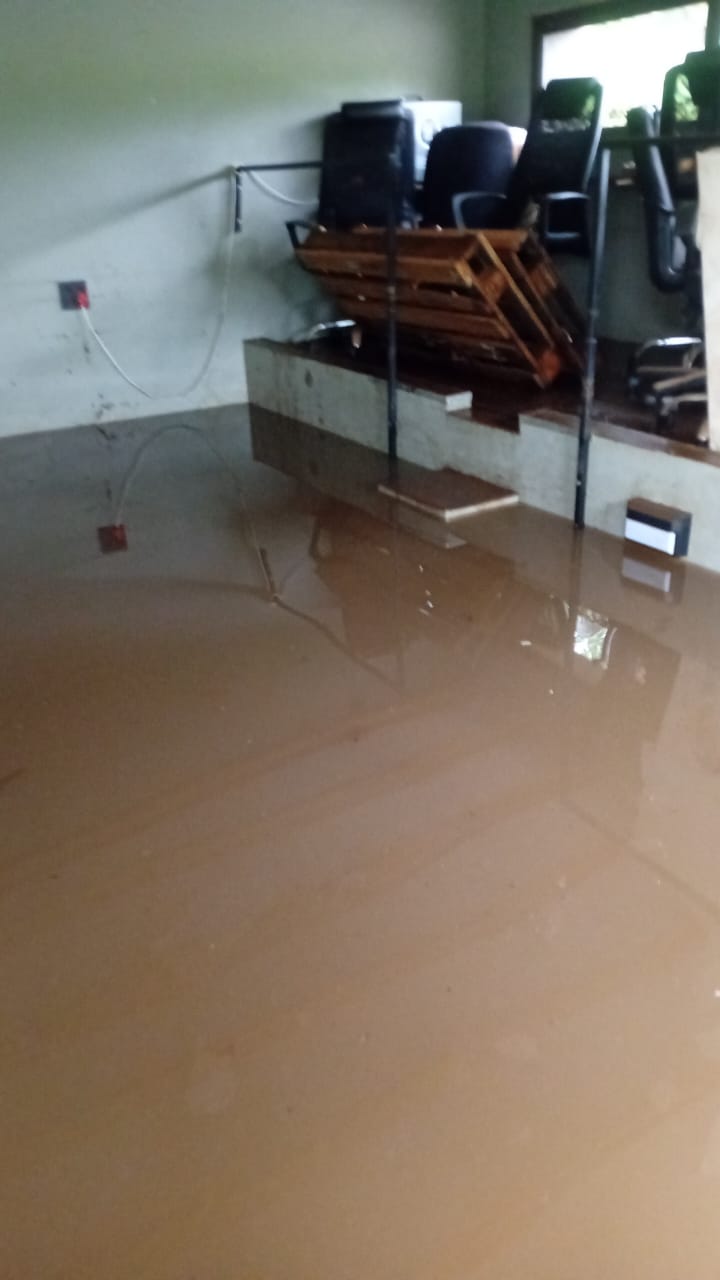
At Antares, we felt that the heavy rains experienced in previous years couldn’t be much worse than what was being predicted. The hide had been submerged before, but it had always drained quickly thanks to the infrastructure we had put in place during construction. We didn’t expect it to affect us too severely.
We were at the camp with Savanna and some of her friends on the weekend when it all began. We left for Hoedspruit before the rains really set in, hoping the camp would be in good hands while we were away. Linky stayed behind to look after things, while Armstrong and Adelaide took some annual leave as there were no guests booked in.
Once back in Hoedspruit, we could relax a little. Two days later, on 13 January, the rains arrived with a vengeance and reports of widespread flooding started coming in. The usually dry Swartspruit River on Grietjie began to rise rapidly and soon reached a level where it was impossible to cross. The rain persisted for the next 50–60 hours and rivers continued to swell. Dams broke upstream, compounding the problem, and reports emerged of some areas receiving close to 800mm of rain over four to five days.
Sitting in Hoedspruit, we felt completely helpless. We couldn’t get through to the camp and Linky was stuck on her own, doing her best to look after everything. Thankfully, she was safe, and the daily phone calls to check in were always reassuring. The reserve community and neighbouring landowners were incredible, with everyone pulling together to help wherever they could.
Videos and photos streamed in from owners and wardens across the reserve, and the devastation was heartbreaking. Seeing friends’ homes destroyed along the riverbanks, hearing reports of vehicles stuck in deep mud, and listening to the constant thrum of helicopters overhead as they headed out on rescue missions or evacuations was surreal. Yet, over the following days, this was countered by the remarkable community spirit on display as people helped neighbours in need, repaired roads, and worked tirelessly to reopen river crossings.
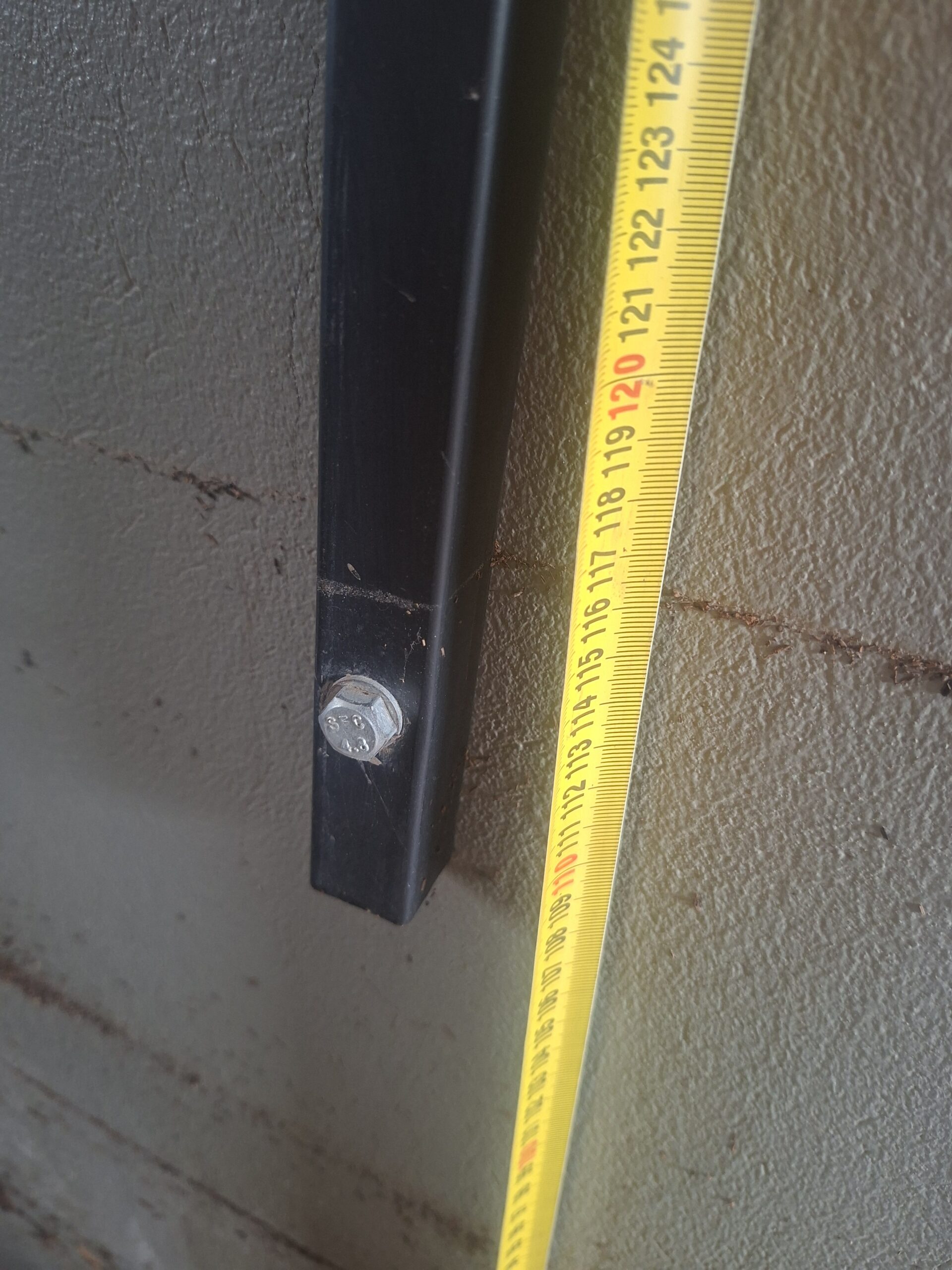
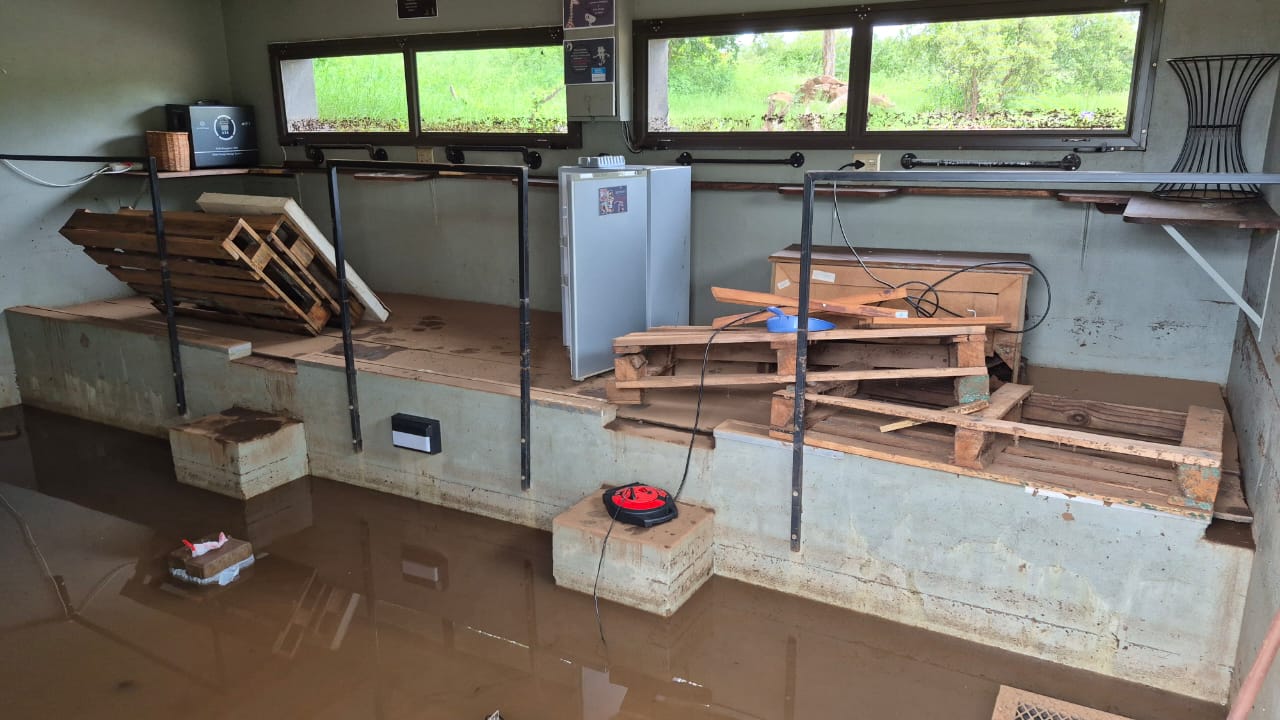
Linky sent detailed photos showing the extent of the damage. Initially, it looked as though the hide might escape the worst of it. Equipment such as fridges and inverters had been lifted above the previous high-water mark—but as it turned out, that wasn’t high enough. The water continued to rise as the surrounding ground became completely saturated, eventually peaking at a depth of 1.16m inside the hide. Cushions floated everywhere, office chairs stood submerged, and the electricity tripped once plugs and lights went underwater. Thankfully, by this stage the neighbours had removed the books and canvases from the walls and shelves.
As the water began to recede, Linky worked tirelessly, carrying chairs and cushions up to the main building and doing her best to clean them. All we could do was offer moral support over the phone, as the roads remained cut off. Eventually, on the 21st—nearly a full week after the rains began—Mel and I were finally able to get through to the camp.
We brought Adelaide with us and arranged a lift for Linky back to Hoedspruit the following morning so she could be reunited with her family. Armstrong returned the day after that, and slowly things began to feel more normal again.
Although the roads were still in poor condition, a 4×4 could manage them without too much trouble. The journey from Hoedspruit, however, involved a long detour via Gravelotte as the R40 had been washed away. This added around 90 minutes to the drive and included some particularly sketchy sections over compromised bridges.
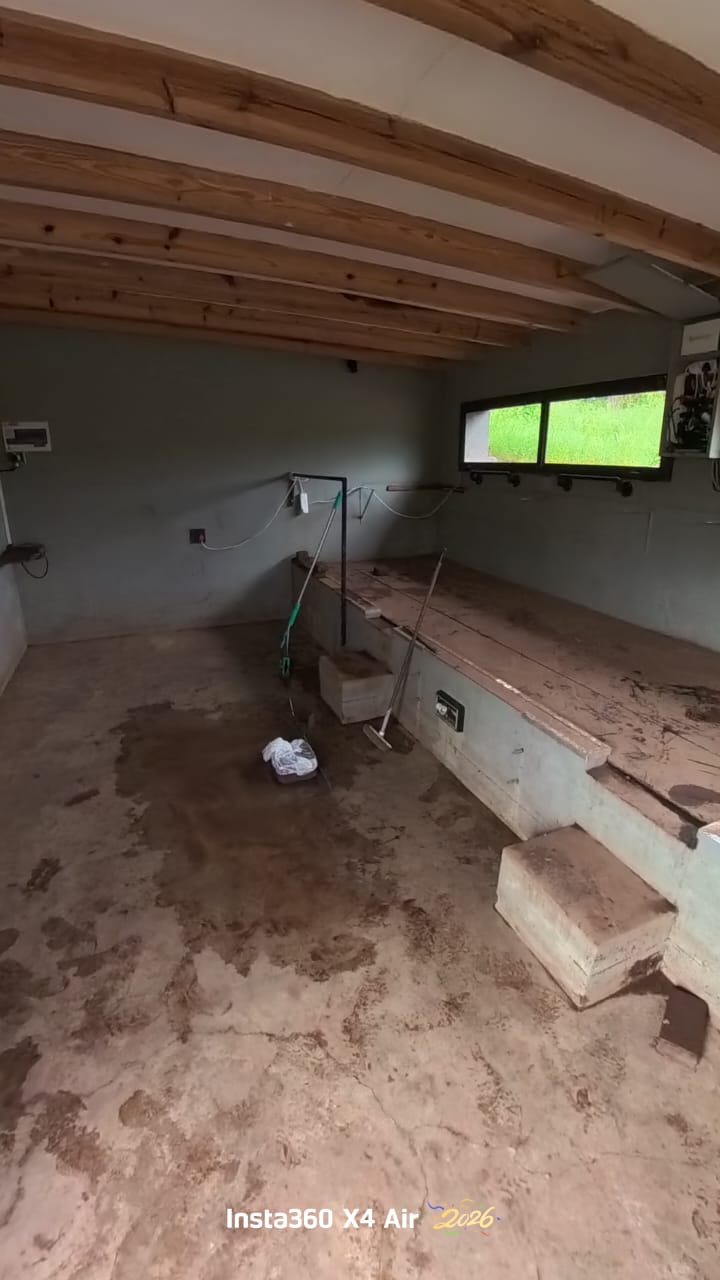
Once at the camp, we got straight to work. We drained the remaining water from the hide and began the cleanup. The fridge and inverter would need thorough checks before even attempting to switch them on, in case of water damage. The office chairs initially looked serviceable, but closer inspection revealed that the seats had been fully submerged and the wooden bases were likely compromised—not something you want to test against their claimed 120kg load rating. The shelving had perished, and the kist that once held pillows and blankets sadly made its way to the furniture graveyard.
The main lodge fared better, though there was water damage to sections of the ceiling in the dining area around the chimney, as well as in some bedrooms and bathrooms. One bathroom wall suffered severe damp and will require major treatment. The access road and the road up to our house will also need substantial repairs once everything has dried out and we can begin filling the newly formed gullies.
In the grand scheme of things, we have been among the lucky ones. While we suffered damage, it was minimal compared to what many others experienced. The hide will be repaired and we’ll be open for business again fairly soon. Others, however, are facing the reality of rebuilding entire homes from scratch. Those in the surrounding rural villages have lost far more, but there are widespread efforts underway to provide emergency supplies and assistance.
This flood will go down in history as the worst in living memory. In years to come, there will be many new stories shared around bush campfires—stories of heroic rescues, narrow escapes, broken homes and vehicles, and, eventually, the remarkable rejuvenation of the bush that follows such destruction.